Living in MallorcaGuide
Healthcare in Mallorca: how it works for residents and visitors
Health cards, family doctors, the four public hospitals, EHIC and GHIC, duty pharmacies and care in English: a clear map of how healthcare works on the island, checked against official sources.
 Placeholder image
The short answer
Public healthcare in Mallorca is run by IB-Salut, the Balearic health service. Residents covered by Spanish Social Security register at their local health centre and receive a health card. EU visitors use the EHIC and UK visitors the GHIC for necessary care in public centres. In an emergency, call 112 or 061. Son Espases in Palma is the main hospital.
Key takeaways
- IB-Salut runs four general public hospitals on Mallorca: Son Espases and Son Llàtzer in Palma, Inca and Manacor.
- Residents need entitlement first (work, an S1, the convenio especial or permanent residence), then apply for the health card.
- The EHIC and the UK GHIC cover necessary treatment in the public system only, not private clinics or repatriation.
- Out of hours, use the SUAP in Palma and Inca or a PAC elsewhere; for a life-threatening emergency, call 061 or 112.
- A duty pharmacy is open in every area at night; the official rota is published by the Balearic pharmacists' college.
On this page
- Who runs public healthcare in Mallorca, and how is it organised?
- Which public hospitals serve Mallorca, and where are they?
- How do residents get a public health card in Mallorca?
- How do appointments and out-of-hours care work in Mallorca?
- Can EU and UK visitors use public healthcare in Mallorca?
- How do you find an open pharmacy in Mallorca at night?
- Where can you get healthcare in English in Mallorca?
- What should you keep at hand for medical visits in Mallorca?
Healthcare in Mallorca is good, and the public system is the backbone of it. IB-Salut, the Balearic health service, runs the island's health centres, out-of-hours clinics, ambulance service and four general public hospitals. Residents use it through a health card linked to a family doctor; visitors from the EU and the UK use it through the EHIC or GHIC. Alongside it, a large private sector serves people with private insurance.
Who runs public healthcare in Mallorca, and how is it organised?
IB-Salut, part of Spain's national health system, runs public healthcare across the Balearic Islands. On Mallorca it divides the island into four health sectors, each with one general hospital and a network of health centres (centres de salut) where family doctors and nurses work.
The health centre is the front door. You book your family doctor there, and hospital specialists are reached by referral from primary care, not by booking directly. Son Espases is the reference hospital for the whole of the Balearic Islands, taking the most complex cases from all four islands.
Which public hospitals serve Mallorca, and where are they?
There are four general public hospitals, one per health sector. The switchboard numbers below are IB-Salut's own; for an emergency, always call 112 or 061 instead.
| Hospital | Where | Health sector | Switchboard |
|---|---|---|---|
| Hospital Universitari Son Espases | Palma, Carretera de Valldemossa 79 | Ponent; reference hospital for the Balearics | 871 205 000 |
| Hospital Universitari Son Llàtzer | Palma, Carretera de Manacor km 4 | Migjorn | 871 202 000 |
| Hospital Comarcal d'Inca | Inca, Carretera Vella de Llubí | Tramuntana | 971 888 500 |
| Hospital de Manacor | Manacor, Carretera Manacor to Alcúdia | Llevant | 971 847 000 |
Smaller public hospitals, including the Hospital General and Hospital Joan March, are run as part of the Son Espases and Son Llàtzer groups. Our emergency and useful numbers guide lists who to call for what.
How do residents get a public health card in Mallorca?
First you need entitlement to public healthcare, then you apply for the card (the targeta sanitària individual, or TSI). The card does not create the right to care; it records a right you already have.
Step one: entitlement
- Working or self-employed in Spain: paying Spanish social security gives you and your registered dependants access on the same basis as Spanish workers.
- Pensioners with an S1: an S1 from your home country (UK state pensioners can apply) is registered with the INSS, Spain's social security institute, which issues a social security number.
- Convenio especial: a public pay-in scheme for people who neither work nor have permanent residence. You must have been on the padrón (the town hall register) for at least a year, and you pay a monthly fee.
- Permanent residence: after five years of legal residence, you can register for state healthcare, unless another country already pays for your care, for example through an S1.
Step two: the health card
Apply at the health centre for your address or at IB-Salut's health card service in Palma, or online with a digital certificate or Cl@ve. Bring the application form, a recent colour photo (26 by 32 mm, as for a Spanish ID card) and, in some municipalities, a padrón certificate. The address you give must match your padrón record. Once you have the card, you are assigned a family doctor at your health centre.
Residents pay a share of the price of prescribed medicines, set by income and circumstances; IB-Salut explains the rates. Non-EU citizens applying for non-lucrative residence must show public or private health insurance with an insurer authorised in Spain. Our relocation partners can help you choose the route that fits your situation.
How do appointments and out-of-hours care work in Mallorca?
Book your family doctor online or by phone, and use the out-of-hours network when your health centre is closed. IB-Salut asks patients to book ahead except in urgent cases.
- Appointments: through the Cita Prèvia GOIB app, the IB-Salut patient portal, or INFOSALUT CONNECTA on 971 220 000.
- Out of hours in Palma and Inca: the SUAP urgent care centres (S'Escorxador, Escola Graduada and Teresa Piqué in Palma; Es Blanquer in Inca) open Monday to Thursday from 20:00 to 08:00, from 15:00 on Fridays, and around the clock at weekends and on public holidays.
- Out of hours elsewhere: the PACs (punts d'atenció continuada) cover the rest of the island; IB-Salut publishes the current list.
- Hospital emergency departments: for serious problems that cannot wait.
- 061: IB-Salut's urgent medical service, which coordinates ambulances and home visits. Call it, or 112, for anything life-threatening.
Can EU and UK visitors use public healthcare in Mallorca?
Yes, for treatment that cannot wait until you get home. EU visitors show the European Health Insurance Card (EHIC) and get the same rights as people insured in Spain. UK visitors use the UK Global Health Insurance Card (GHIC), which is free and valid in Spain; an existing UK EHIC stays valid until it expires.
Both cards work only in the public system: IB-Salut health centres, SUAP and PAC clinics, and the public hospitals. They do not cover private clinics, rescue, repatriation or planned treatment, and the UK government is clear that the GHIC does not replace travel insurance. Visitors from outside the EU and UK should travel with insurance that covers medical care.
How do you find an open pharmacy in Mallorca at night?
Every area has a duty pharmacy (farmàcia de guàrdia) open outside normal hours on a rota. The Balearic government approves the duty calendar each year, and the Col·legi Oficial de Farmacèutics de les Illes Balears (COFIB) publishes the current list on its website. Pharmacies are marked with a green cross, and a closed pharmacy usually shows the nearest duty pharmacy on its door.
Where can you get healthcare in English in Mallorca?
The 112 emergency line takes calls in English and German as well as Spanish and Catalan. In the public system, consultations run in Spanish or Catalan and you cannot count on English, so bring a Spanish speaker or a translation app for anything complex.
The private sector in Palma and the southwest works routinely in English, German and other languages, and is usually paid through private insurance. The UK Foreign Office publishes a list of English-speaking medical facilities in Spain, organised by region, without endorsing any of them. For preventative care rather than emergencies, these two partners of ours work with international clients:

Fix, Move, Perform Better · (Preventative) health
THE MOVEMENT
Physiotherapy, osteopathy and sports massage in Puerto Portals and central Palma, with a team speaking English, Spanish, German, French, Italian and Catalan.
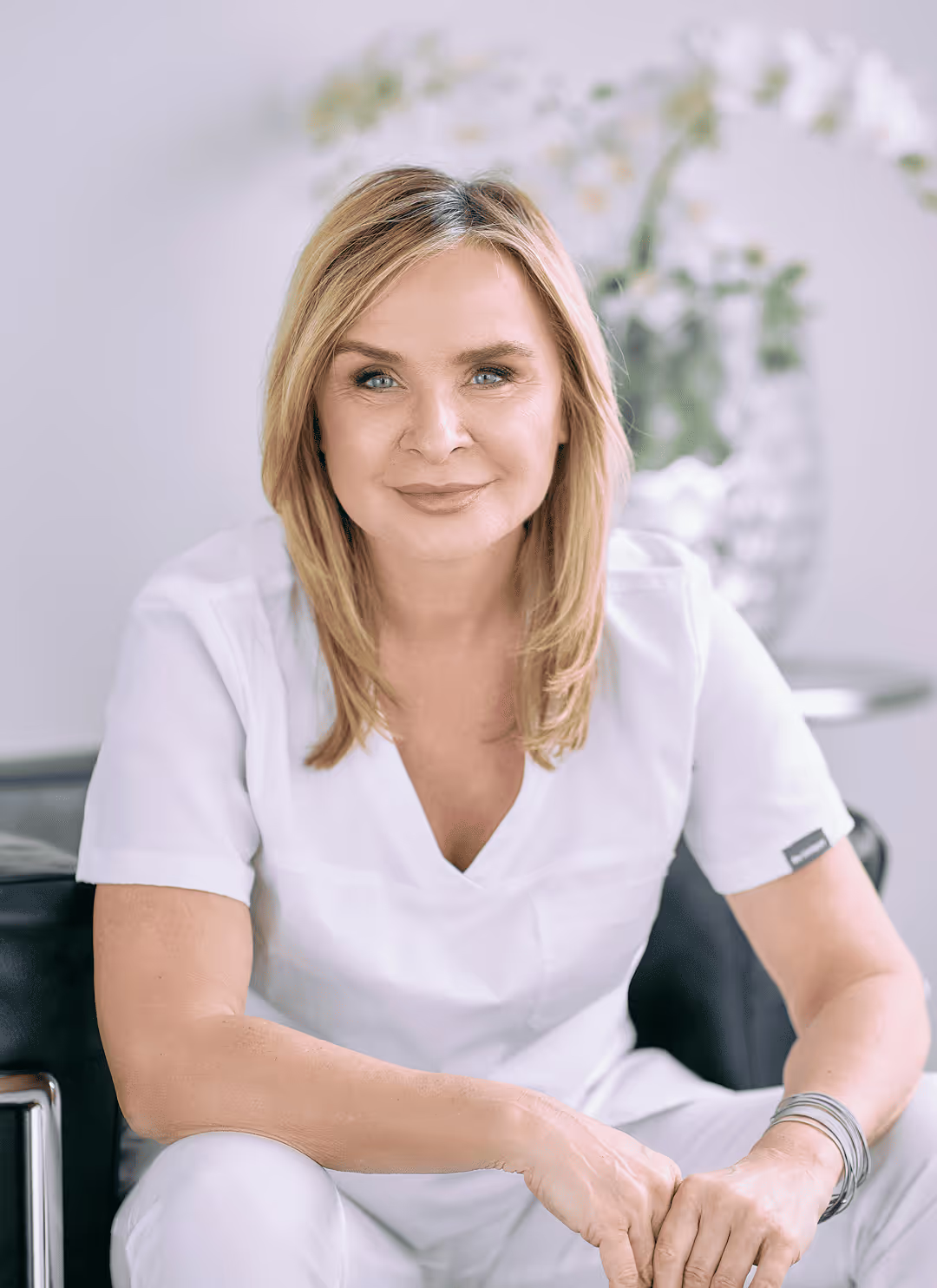
Skin In Expert Hands · (Preventative) health
Dr. Monika Brück Aesthetics
A dermatologist on Camí dels Reis in Palma; see her site for services.
For more on staying well on the island, from recovery to screening, see our preventative health partners and our longevity guide.
What should you keep at hand for medical visits in Mallorca?
- Your health card, EHIC or GHIC, plus your passport or NIE.
- Your private or travel insurance policy number and its 24-hour assistance line.
- A list of your regular medicines by their generic names, with doses.
- The address of your nearest health centre, PAC or SUAP, saved before you need it.
- 112 and 061 stored in every phone in the family.
Places in this story
Fix, Move, Perform Better · (Preventative) health
THE MOVEMENT
Physiotherapy, osteopathy and sports massage in Puerto Portals and central Palma, with a team speaking English, Spanish, German, French, Italian and Catalan.
Skin In Expert Hands · (Preventative) health
Dr. Monika Brück Aesthetics
A dermatologist on Camí dels Reis in Palma; see her site for services.
Questions readers ask
What is the main hospital in Mallorca?
Hospital Universitari Son Espases in Palma is the island's main public hospital and the reference hospital for all the Balearic Islands. Mallorca has three more general public hospitals: Son Llàtzer in Palma, the Hospital Comarcal d'Inca and the Hospital de Manacor. All are run by IB-Salut.
Can I use my EHIC or GHIC in Mallorca?
Yes. The EHIC, and the UK GHIC for British visitors, cover necessary treatment in Mallorca's public health system on the same terms as for people insured in Spain. They do not cover private clinics, repatriation or planned treatment, so travel insurance is still recommended.
How do I get a health card in Mallorca as a resident?
You first need entitlement to public healthcare, for example through work, an S1, the convenio especial or permanent residence. Then you apply for the individual health card at your local health centre or IB-Salut's health card service, with a photo, the application form and, in some towns, a padrón certificate.
What number do I call for a medical emergency in Mallorca?
Call 112, the European emergency number, or 061, IB-Salut's urgent medical service. Both work around the clock and send ambulances. The 112 line also takes calls in English and German.
How do I find a pharmacy open at night in Mallorca?
Look for the duty pharmacy (farmàcia de guàrdia). The Balearic pharmacists' college, COFIB, publishes the current rota on its website, and closed pharmacies usually display the nearest duty pharmacy on their door.
Sources and checks
- Mallorquissimo print guide
- IB-Salut: hospitals
- IB-Salut: health sectors
- IB-Salut: urgent care services
- IB-Salut Primary Care Mallorca: SUAP
- IB-Salut: primary care appointments
- Govern de les Illes Balears: individual health card procedure
- GOV.UK: healthcare for UK nationals living in Spain
- NHS: UK Global Health Insurance Card
- Your Europe (European Union): unplanned healthcare during temporary stays
- Ministerio de Inclusión, Seguridad Social y Migraciones: non-lucrative residence
- Govern de les Illes Balears: duty pharmacies 2026
- COFIB, Col·legi Oficial de Farmacèutics de les Illes Balears
- SEIB 112 Illes Balears: service charter
- GOV.UK: Spain, list of English-speaking medical facilities
- THE MOVEMENT, official website
- Dr. Monika Brück, official website
About the author