Explore the islandPlaces
Serra de Tramuntana guide: villages, walks and the Sóller valley
Mallorca's mountain range is best taken village by village: Valldemossa and Deià, Sóller and its port, Fornalutx and the terraced west coast. Here is how to see it well, on foot, by train and from the sea.
 Placeholder image
The short answer
The Serra de Tramuntana is Mallorca's UNESCO-listed mountain range along the northwest coast. Base yourself in Sóller or Port de Sóller, ride the 1912 train from Palma, visit Valldemossa's Charterhouse and Deià's Robert Graves house, walk a stage of the GR 221 between October and May, and drive down to Sa Calobra early in the day.
Key takeaways
- UNESCO listed the Cultural Landscape of the Serra de Tramuntana in 2011 for its dry stone terraces, paths and water systems.
- Sóller and Port de Sóller make the most practical base: train to Palma, tram to the sea, the GR 221 on the doorstep.
- Sóller holds its market on Saturday morning and Valldemossa on Sunday; go early to either.
- Walk between October and May; in summer, start at dawn and carry more water than you think you need.
- The Torrent de Pareis is a serious canyon descent; most visitors see its mouth on foot from Sa Calobra.
On this page
- What is the Serra de Tramuntana like, and who does it suit?
- Which Tramuntana towns and villages are worth knowing?
- Where are the best beaches and coves in the Tramuntana?
- How do you visit Sa Calobra and the Torrent de Pareis safely?
- Which walks show the Serra de Tramuntana at its best?
- What should you eat and buy in the Tramuntana?
- Where should you stay in the Serra de Tramuntana?
- How do you get around the Tramuntana, and when should you go?
- What does one perfect day in the Tramuntana look like?
The Serra de Tramuntana is the limestone spine of Mallorca's northwest coast, and the part of the island that most rewards slow travel. Base yourself in the Sóller valley, give each village its own morning, and keep the afternoons for the sea or a walk.
This is our area guide to the range itself: the villages, the walks, the train and the coast. If you want the drive along it from the southwest, our Port d'Andratx and Tramuntana guide follows the mountain road from Andratx to Sóller.
What is the Serra de Tramuntana like, and who does it suit?
It is mountain country that ends in the sea: terraced slopes, olive groves, pine woods and stone villages linked by one winding coast road. It suits walkers, cyclists and couples who would rather sit on a village square than on a sunbed.
UNESCO inscribed the Cultural Landscape of the Serra de Tramuntana as a World Heritage site in 2011, with a core area of about 30,745 hectares. The listing honours what people built here: the dry stone terraces, mule paths, cisterns and irrigation channels that made a near-vertical landscape farmable. Beaches are few and mostly pebble, so families who want sand every day are better served in the north or the south.
Which Tramuntana towns and villages are worth knowing?
Sóller, Valldemossa and Deià are the famous three. Fornalutx, Banyalbufar and Estellencs are smaller, quieter and often the places people remember.
| Town or village | Best for | Good to know |
|---|---|---|
| Valldemossa | The Charterhouse, Chopin, a Sunday market | Busiest from late morning, so go early |
| Deià | Robert Graves, artists' history, a steep pebble cove | The Graves house museum opens five days a week |
| Sóller | Modernist square, museums, Saturday market | The train from Palma stops by the main square |
| Port de Sóller | A sheltered bay, sunsets, boats along the coast | Linked to Sóller by the historic tram |
| Fornalutx | Cobbled lanes and mountain views | Above the Sóller valley, close to the GR 221 |
| Banyalbufar | Sea-facing terraces and Malvasia wine | On the coast road south of Valldemossa |
| Estellencs | A tiny protected village and a stony cove | One of the smallest municipalities on the island |
Valldemossa
Valldemossa grew up around the Real Cartuja, the Carthusian monastery where Frédéric Chopin and George Sand spent the winter of 1838 to 1839. Its rooms and gardens are open to visitors, and each summer it hosts the International Chopin Festival. The village's own saint, Santa Catalina Thomàs, has a statue beside the parish church and a festival that fills the streets in late July.
Come on a Sunday for the market, and order a coca de patata, the soft potato bun the village is known for, with your coffee; Cappuccino Grand Café, one of our partners, has a café in the village.
Deià
Deià is the village of writers and painters, strung along a ridge between the mountains and the sea. The poet Robert Graves came to Mallorca in 1929 and built his house, Ca n'Alluny, just outside the village on the road to Sóller. The Fundació Robert Graves bought it in 2005 and runs it as a museum, with the garden restored to its 1930s layout. Graves is buried in the small cemetery beyond the church, under a cypress.
From the village, a stone track leads down to Cala Deià, a pebble cove with clear water. The GR 221 passes through, and the Consell de Mallorca's Can Boi refuge is in the village.
Sóller and Port de Sóller
Sóller sits in a bowl of orange and lemon groves, and the citrus and wine it once shipped to France paid for its grand houses. On the main square, the medieval church of Sant Bartomeu wears a modernist façade designed by Joan Rubió in 1904. A few streets away, Can Prunera, a modernista house restored in 2010, shows the Serra collection, with works by Miró, Picasso, Gauguin, Klimt and Barceló, and has a sculpture garden. The botanical garden on the edge of town grows plants native to the Balearics and other islands.
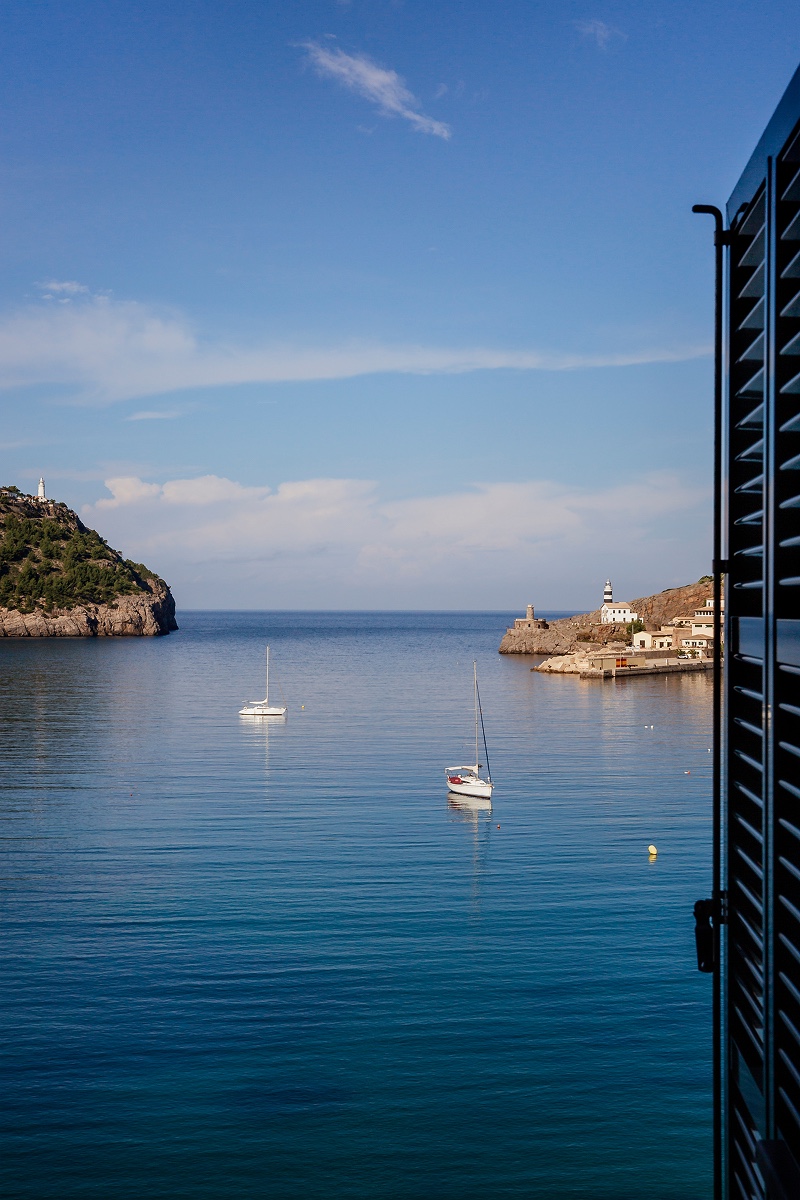
The port is a sheltered, almost round bay with a lighthouse on each side of its mouth and a promenade made for an evening walk. On the headland, the Torre Picada watchtower was built between 1614 and 1623 against pirate raids, and every May the town re-enacts a 16th-century pirate attack in its fiesta, Es Firó.
Fornalutx and Biniaraix
Fornalutx, above the Sóller valley, is a village of cobbled lanes and stone houses that has won several awards for its conservation and is counted among Spain's most beautiful villages. On the way up, the hamlet of Biniaraix, 1.2 kilometres from Sóller, is the start of the old stone path up the Barranc de Biniaraix, one of the finest short walks in the range.
Banyalbufar and Estellencs
On the coast road south of Valldemossa, Banyalbufar is built over terraces that step down to the sea, once famous for Malvasia grapes that local winemakers have now revived. Stop at the 16th-century Torre de ses Ànimes, a watchtower built against pirate raids, for the view. A little further on, Estellencs is one of the island's smallest municipalities; its historic centre has been a protected cultural asset since 2007, and a small stony cove lies below.
Where are the best beaches and coves in the Tramuntana?
Expect coves rather than long beaches. The water is deep and clear, the shores are mostly pebble and the way down is often steep.
- Port de Sóller: the only real beach in the valley, on a calm bay, and the easiest with children.
- Cala Deià: a pebble cove below the village, reached by a stone track or a narrow road.
- Sa Calobra: a small cove at the end of the Ma-2141, beside the pebble beach at the mouth of the Torrent de Pareis.
- Cala Estellencs and Port de Valldemossa: small stony coves at the foot of steep roads, best on a calm day.
How do you visit Sa Calobra and the Torrent de Pareis safely?
Drive down the Ma-2141 from the main mountain road early in the day, or come by excursion boat from Port de Sóller in season. From Sa Calobra, a short footpath leads to the pebble beach where the Torrent de Pareis meets the sea, between walls up to 200 metres high.
Walking the gorge is another matter. The Torrent de Pareis is a protected natural monument, and the Balearic government rates the 3.3 kilometre descent from Entreforc to the sea as highly difficult: slippery rock, little phone coverage and a real risk of flash floods. Do not start under any rain or storm warning, do not go alone, and consider a guide.
Which walks show the Serra de Tramuntana at its best?
The GR 221, the Ruta de Pedra en Sec or Dry Stone Route, is the backbone: a long-distance path on old mule tracks and terrace paths from Port d'Andratx to Pollença. Walk single stages as day hikes, or link them with nights in the Consell de Mallorca's refuges.
| Refuge | Where | Useful for |
|---|---|---|
| Can Boi | Deià | A night in the village and the stretch towards Sóller |
| Muleta | Above Port de Sóller | Starting or ending at the port |
| Tossals Verds | Escorca, in the high mountains | The wildest central stages |
| Son Amer | Near the Lluc sanctuary | Starting or ending at Lluc |
| Pont Romà | Pollença | The end of the route |
Book beds and meals through the Consell's refuge booking site. Shorter outings from the Sóller valley include the Barranc de Biniaraix path and the GR 221 stretch between Deià and Sóller. The highest summit, the Puig Major, is a military zone and closed to walkers.
What should you eat and buy in the Tramuntana?
Buy olive oil from the terraces, Sóller oranges in winter and Malvasia wine from Banyalbufar. Estates around Valldemossa and Sóller's olive growers sell direct; our guide to Mallorca's olive oil lists where to taste.
| Day | Town | What to expect |
|---|---|---|
| Saturday morning | Sóller | Valley produce, crafts and clothes in the town centre |
| Sunday morning | Valldemossa | A village market, and the day for coques de patata |
For dinner, eat by the water in Port de Sóller. Davant la Mar, the all-day bistro at Hotel Espléndido, has an indoor lounge and a terrace on the seafront promenade, and the hotel bar is a favourite for watching the sun set over the bay. For more tables across the island, see our restaurant selection.
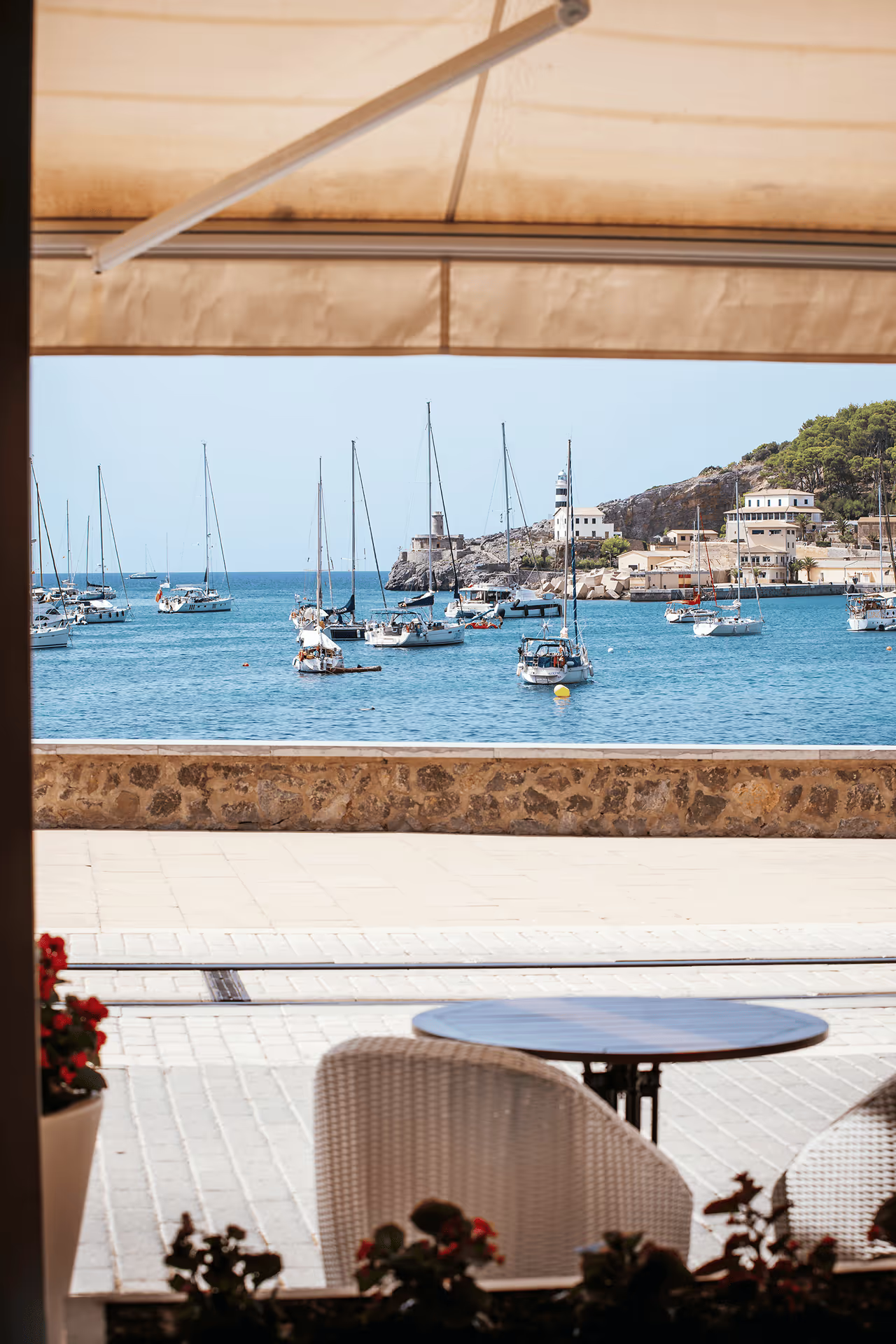
Sunset On The Bay · Port de Sòller
Davant la Mar Bistro & Bar
An all-day bistro with a terrace on the Port de Sóller promenade, open to hotel guests and passers-by alike.
Where should you stay in the Serra de Tramuntana?
Stay in the Sóller valley for transport, restaurants and the sea; choose Deià, Fornalutx or Valldemossa for quiet evenings.
Our pick on the bay is Hotel Espléndido, on the Port de Sóller promenade: 74 rooms facing the sea or the gardens, two pools with sea views, one of them an infinity pool, and a spa with a Finnish sauna, Turkish bath and indoor jacuzzi. The building dates from 1956 and was renovated in 2005 by the family-owned Portixol Group, and Sóller is 15 minutes away by tram. See our hotel pages for more.
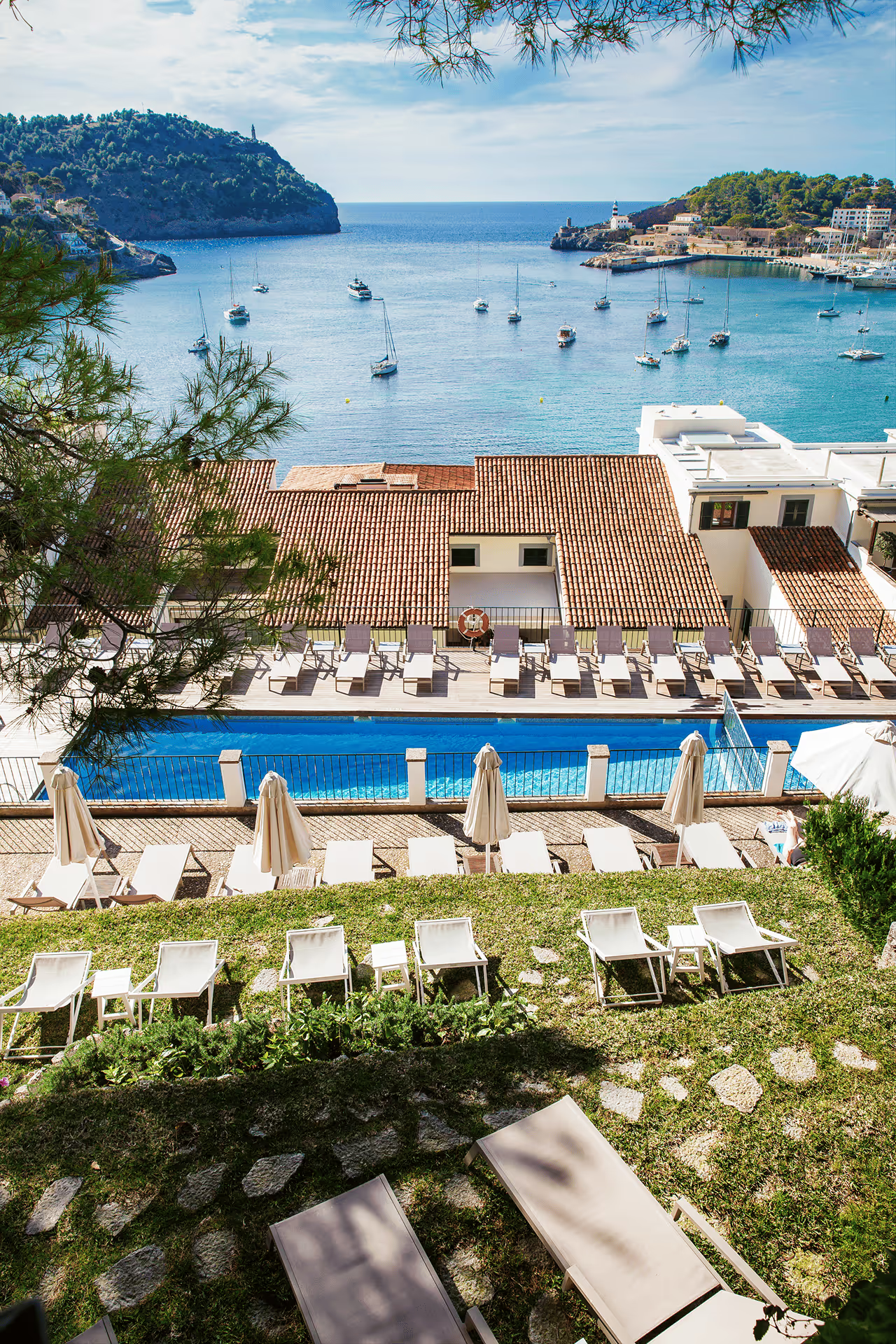
Harbour Views & Sunsets · Hotels
Hotel Espléndido
A seafront hotel on the Port de Sóller promenade with sea-view pools and a spa, on the tram line to Sóller.
If a holiday turns into a plan to stay, Berrow Projects, a family-led design and build team based in the town, turns old village houses into finished homes, and opened the Sóller Tennis Club, where visiting players can book lessons or rent a court. Our real estate partners and community and sports clubs are the next places to look.
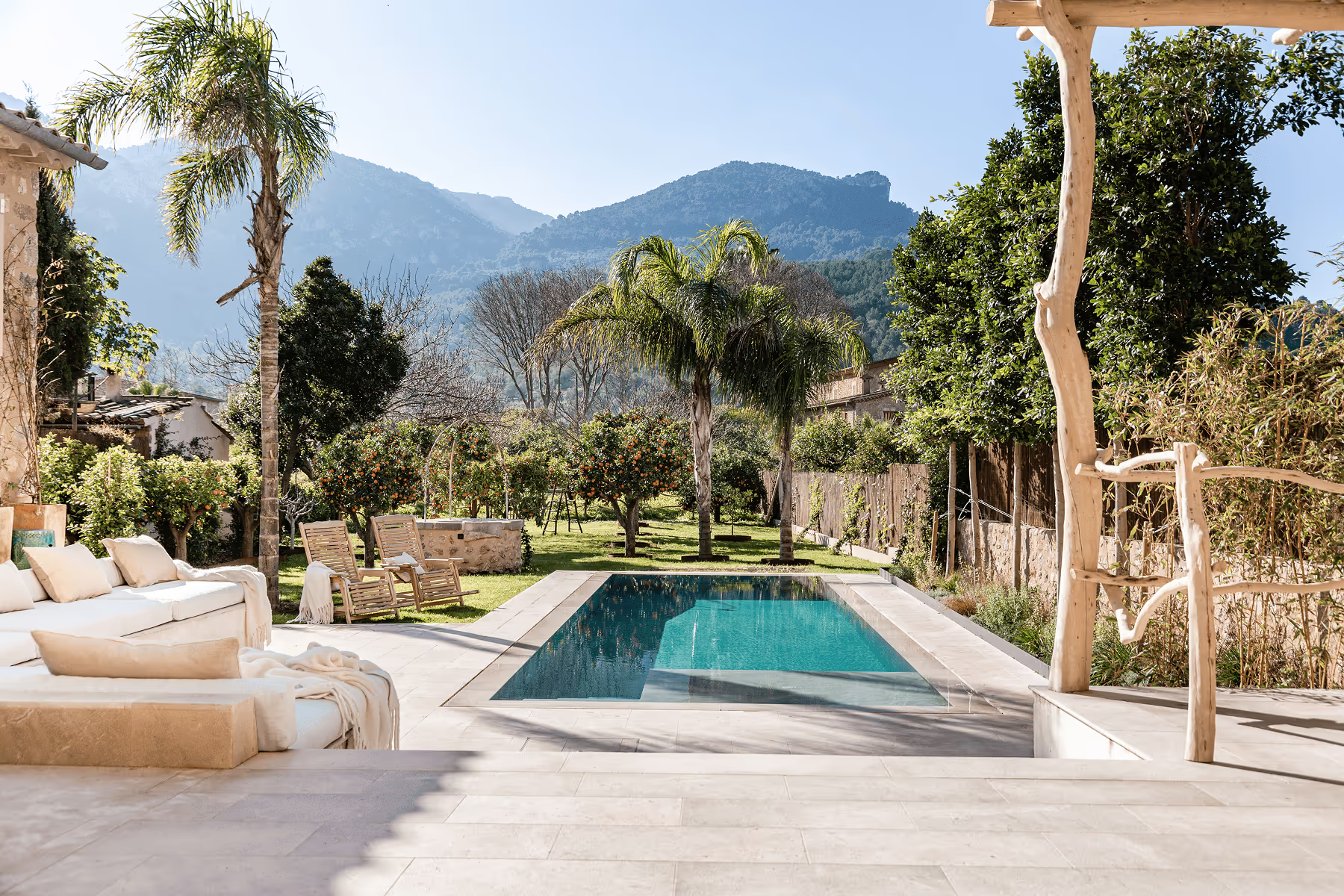
Old Homes, New Life · Architecture & Construction
Berrow Projects
A family-led Sóller team that restores old townhouses and fincas in the valley into finished homes.
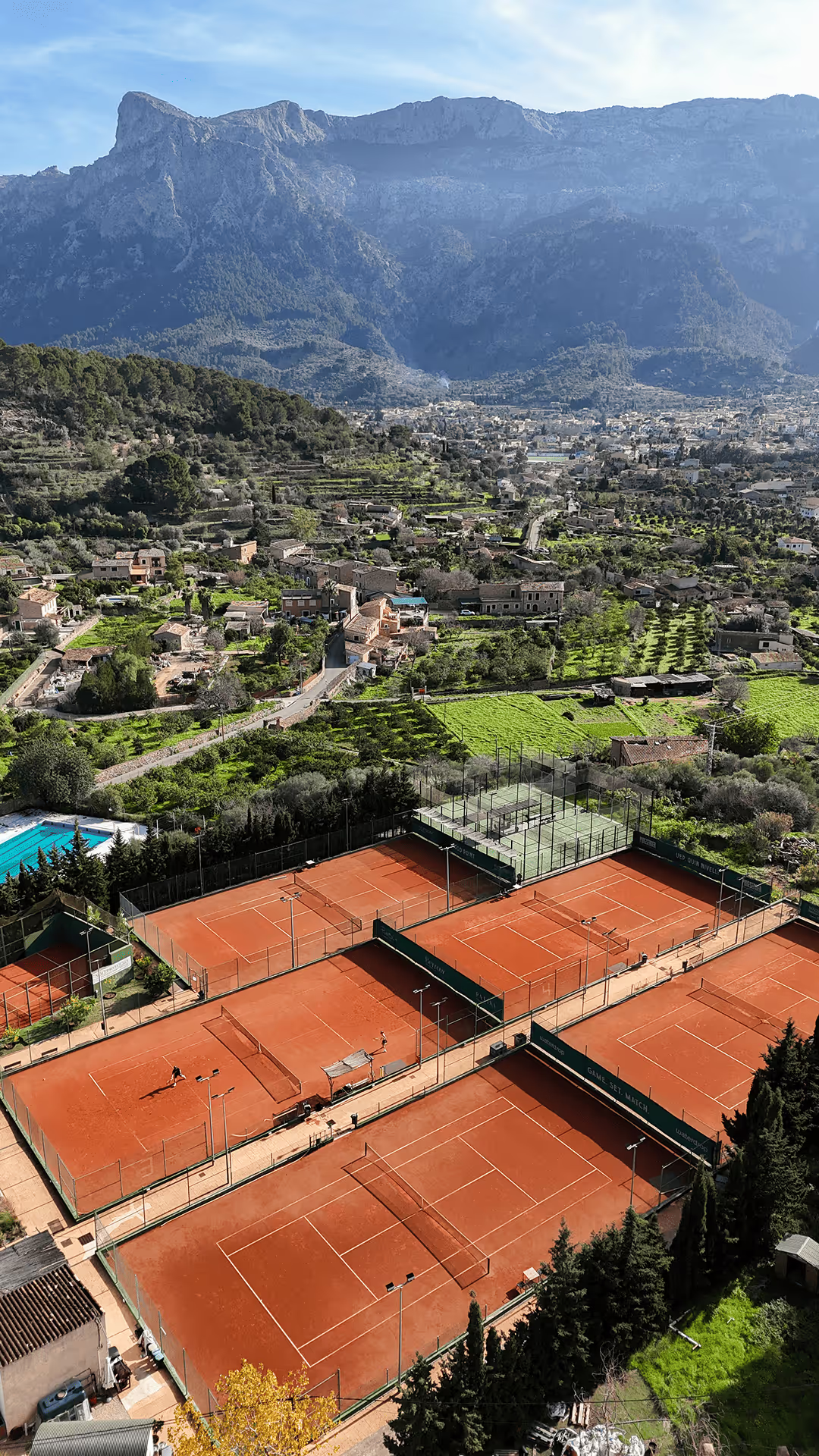
Mountains, Padel & Pool · Community & Sports
Sóller Tennis Club
A tennis club and social hub in Sóller, with lessons and court rental for visitors.
How do you get around the Tramuntana, and when should you go?
A car gives the most freedom, but the Sóller valley works well without one. The Tren de Sóller, inaugurated in 1912, climbs from Palma through the mountains to Sóller, and the tram, opened in 1913, continues through the orange groves to the port. Timetables change with the season, so check before you go.
If you drive, set off early: by late morning the car parks at Valldemossa and Sa Calobra fill. Spring and autumn are best for walking and quieter villages; summer suits the bay; in winter some hotels and restaurants close, so check before you go.
What does one perfect day in the Tramuntana look like?
- 8:00 Breakfast in Valldemossa before the coaches arrive, then the Charterhouse as it opens.
- 11:00 Drive on to Deià: the Robert Graves house (check the opening days) or a swim at Cala Deià.
- 14:00 Lunch in Sóller, then Can Prunera or a slow lap of the main square.
- 16:30 The tram to Port de Sóller, a swim off the beach and a walk along the promenade.
- 19:30 Sunset drinks and dinner on the terrace at Davant la Mar.
Places in this story
Sunset On The Bay · Port de Sòller
Davant la Mar Bistro & Bar
An all-day bistro with a terrace on the Port de Sóller promenade, open to hotel guests and passers-by alike.
Harbour Views & Sunsets · Hotels
Hotel Espléndido
A seafront hotel on the Port de Sóller promenade with sea-view pools and a spa, on the tram line to Sóller.
Old Homes, New Life · Architecture & Construction
Berrow Projects
A family-led Sóller team that restores old townhouses and fincas in the valley into finished homes.
Mountains, Padel & Pool · Community & Sports
Sóller Tennis Club
A tennis club and social hub in Sóller, with lessons and court rental for visitors.
Questions readers ask
Is it better to stay in Sóller or Valldemossa?
Sóller, or its port, is the more practical base: it has the train to Palma, the tram to the sea, a beach and the widest choice of restaurants. Valldemossa is lovely in the evening once day visitors leave, but it has no beach and fewer places to eat. Many people stay in the Sóller valley and visit Valldemossa early in the morning.
How do you get from Palma to Sóller without a car?
Take the Tren de Sóller from Palma; the line has crossed the mountains since 1912 and arrives in the centre of Sóller. From there, the tram, running since 1913, continues through the orange groves to Port de Sóller. Timetables change by season, so check the operator's website before you go.
Can you walk the Torrent de Pareis?
Only with canyon experience, the right equipment and a settled forecast. The Balearic government rates the descent from Entreforc to Sa Calobra as highly difficult and warns of flash floods, slippery rock and poor phone coverage. If that is not you, walk the short footpath from Sa Calobra to the mouth of the gorge instead.
When is the best time to visit the Serra de Tramuntana?
Spring and autumn, roughly March to June and September to November. The paths are cooler, the light is clear and the villages are calmer. Summer is fine for the bay and the sea, but keep any walking for the early morning.
Which Tramuntana villages are most worth visiting?
Valldemossa for the Charterhouse, Deià for Robert Graves and its cove, and Sóller for its square, museums and Saturday market. Add Fornalutx for its stone lanes and Banyalbufar for its sea-facing terraces. Give each village a morning rather than rushing them all in one day.
Sources and checks
- UNESCO World Heritage Centre: Cultural Landscape of the Serra de Tramuntana
- Govern de les Illes Balears: Monument Natural del Torrent de Pareis
- Consell de Mallorca: refuge booking
- Tren de Sóller: history
- Ajuntament de Sóller: places to visit
- Ajuntament de Sóller: fairs, fiestas and markets
- Can Prunera Museu Modernista
- Fundació Robert Graves: the house
- Fundació Robert Graves: Deià in Graves's footsteps
- Illes Balears tourism: Valldemossa
- Illes Balears tourism: Sóller
- Illes Balears tourism: Fornalutx
- Illes Balears tourism: Banyalbufar
- Illes Balears tourism: Estellencs
- Hotel Espléndido
- Hotel Espléndido: restaurant and bar
- Berrow Projects
- Sóller Tennis Club
- Cappuccino Grand Café: locations
About the author