Explore the islandPlaces
South Mallorca guide: Es Trenc, Santanyí, Ses Salines and Cabrera
Mallorca's south is flat, bright and close to the sea: salt flats and a long, wild beach, sandstone villages, clear coves and a boat to an island national park. Here is how to use it well.
 Placeholder image
The short answer
South Mallorca is for beach lovers and slow travellers. Swim at Es Trenc, the long wild beach inside a natural park, see the salt flats behind it, take a summer boat from Colònia de Sant Jordi to Cabrera, walk to the Cap de ses Salines lighthouse and spend a market morning in Santanyí. Go in May, June or September.
Key takeaways
- Es Trenc and the Salobrar de Campos salt flats have been a natural park since 2017, covering about 3,768 hectares of land and sea.
- Boats to the Cabrera national park leave from Colònia de Sant Jordi, mainly in summer; only authorised companies may carry visitors.
- Cap de ses Salines is Mallorca's southernmost point; a half-hour coastal walk leads to the beach of Es Caragol.
- Market mornings: Santanyí on Wednesday and Saturday, Ses Salines and Campos on Thursday.
- Casa Manolo on the church square in Ses Salines has been run by the same family since 1945.
On this page
- What is south Mallorca like, and who does it suit?
- Which towns and villages in south Mallorca are worth knowing?
- Which beaches and coves in south Mallorca are worth the drive?
- What should you know about the salt flats and nature in the south?
- Where should you eat, and which markets are on in the south?
- Where should you stay in south Mallorca?
- How do you get to south Mallorca, and when should you go?
- What does one perfect day in south Mallorca look like?
South Mallorca is the island's beach country: a flat, bright landscape of farmland, windmills and salt pans that ends in turquoise water. It suits anyone who plans a holiday around swimming, and it rewards those who also make time for the villages, the markets and a day at sea.
This guide covers the stretch from Llucmajor and Cap Blanc in the southwest of the area to Santanyí and the Mondragó natural park in the southeast. If you only have one day, our day in Santanyí plans it hour by hour; this is the wider picture.
What is south Mallorca like, and who does it suit?
It is the flattest and sunniest part of the island, with low stone villages, almond groves and wide skies. The coast changes as you move east: long sandy beaches and dunes around Es Trenc, then low cliffs cut by narrow rocky coves from Cap de ses Salines to Mondragó.
The south suits families, couples and anyone who wants a quieter Mallorca within an hour of Palma. It is less suited to walkers looking for mountains, and in July and August the best-known beaches are very busy, so timing matters more here than anywhere else on the island.
Which towns and villages in south Mallorca are worth knowing?
Santanyí and Ses Salines are the two villages to base yourself near; Colònia de Sant Jordi is the one seaside town. This is how they compare.
| Town | Best for |
|---|---|
| Santanyí | Sandstone old town, Wednesday and Saturday market, the eastern coves |
| Ses Salines | Village life, Thursday market, long lunches, Es Trenc and Cap de ses Salines |
| Colònia de Sant Jordi | Harbour, town beaches, boats to Cabrera |
| Campos | Inland market town on the way to Es Trenc, Thursday market |
| Llucmajor | The island's largest municipality, Cap Blanc and the southwest cliffs |
Santanyí
Santanyí is built from the golden local sandstone and is the liveliest village in the south, especially on its Wednesday and Saturday market mornings. The parish church of Sant Andreu holds a baroque organ built in 1762, and the Porta Murada is what survives of the walls raised against pirates. We cover the town in detail in our Santanyí day trip.
Ses Salines and Colònia de Sant Jordi
Ses Salines is a small, unhurried village named after the salt pans nearby. Life gathers around the church square, where the Thursday market sets up and where the village's best-known restaurant has fed visitors for decades.
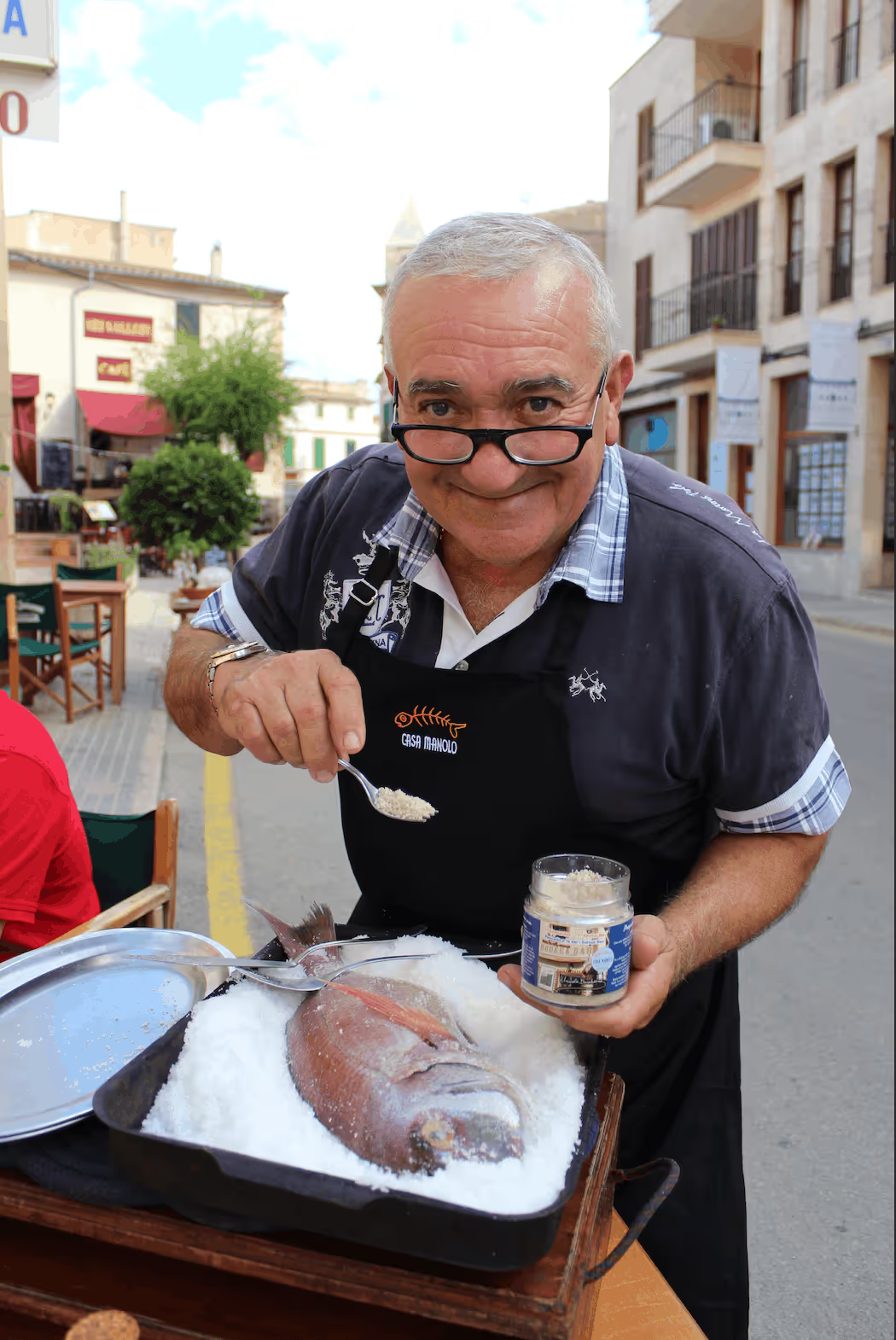
Legendary Since 1945 · Ses Salines
Casa Manolo (Bodega Barahona)
The family bodega on the church square in Ses Salines since 1945, our choice for a long seafood lunch in the south.
Ten minutes south, Colònia de Sant Jordi is a fishing harbour turned small resort, with town beaches either side and the departure point for boats to Cabrera. Its visitor centre for the national park, on Carrer Gabriel Roca, is worth an hour even if you do not sail.
Llucmajor and Cap Blanc
Llucmajor is a working inland town at the head of the largest municipality on the island. Its coast is a long line of high cliffs: at Cap Blanc a lighthouse stands above the sea, with Cabrera visible on clear days, and a coastal path runs west towards the narrow cove of Cala Pi and its watchtower. The lighthouse enclosure is fenced, so the visit is the cliffs and the view.
Inland, Capocorb Vell is one of Mallorca's best-preserved talaiotic settlements, with three circular and two square talaiots from the island's prehistory. Opening days change through the year, so check before you go.
Which beaches and coves in south Mallorca are worth the drive?
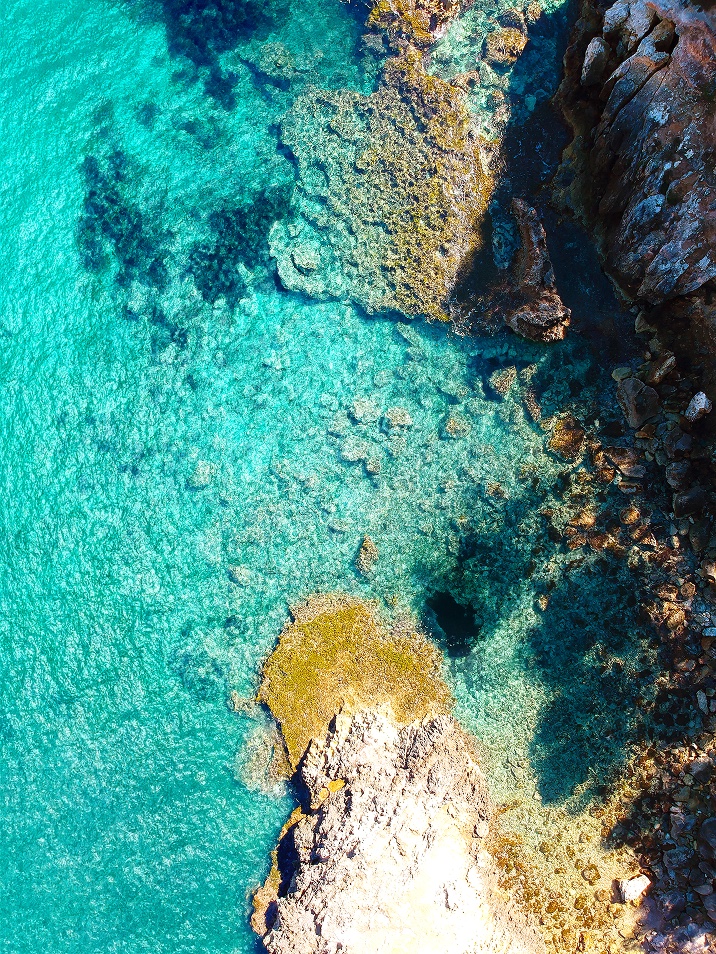
Choose Es Trenc for a long walk on sand, and the coves east of Cap de ses Salines for clear water among rocks. Go early in summer: most car parks fill by late morning.
- Es Trenc: several kilometres of white sand and dunes between Sa Ràpita and Colònia de Sant Jordi, with no hotels behind it. Reach it from Sa Ràpita, Ses Covetes or the Na Tirapel car park, and park only in the authorised car parks.
- Es Caragol: a quiet sandy beach reached on foot in about half an hour along the flat, rocky shore from the Cap de ses Salines lighthouse. There are no facilities and seagrass often lines the sand.
- Cala Llombards: a sandy cove between rocky walls below the village of Llombards, with a car park above and a path down. Small and popular in summer.
- Mondragó natural park: the two beaches of s'Amarador and Font de n'Alis, linked by marked paths, with official car parks for each.
- Caló des Moro: the much-photographed cove near Cala Llombards, best saved for a quiet morning outside high season.
What should you know about the salt flats and nature in the south?
Behind Es Trenc lies the Salobrar de Campos, a wetland where salt is still harvested, and together they form the Es Trenc-Salobrar de Campos natural park. It was declared by law in 2017 and covers about 3,768 hectares, around 61 per cent of it at sea. Spring and autumn bring migrating birds; look for flamingos, avocets and black-winged stilts on the pans.
The salt works near the road to Colònia de Sant Jordi produce the sea salt and flor de sal you will see in delicatessens across the island. It is the south's best edible souvenir; for the island's other producers, see our culinary pages.
At Cap de ses Salines, the southernmost point of Mallorca, the lighthouse stands on a low, windswept headland. Walk from it along the shore towards Es Caragol for the simplest coastal walk in the south, and bring water: there is no shade.
How do you visit the Cabrera national park?
Take a boat from Colònia de Sant Jordi. Cabrera was declared a maritime and terrestrial national park in 1991, and it lies about 10 nautical miles off the coast. Visitors can only arrive by sea, with one of the transport companies authorised by the park each year, or in their own boat with a free navigation permit and, for an overnight stay, a booked mooring.
On the island, everything is on foot. A self-guided route of about 1.5 km from the harbour takes around an hour, and the Es Celler museum in the old wine cellar covers the island's history and nature, free of charge. The late 14th century castle above the harbour is currently closed for safety reasons. Boats run mainly in summer, so check the season before you plan.
Where should you eat, and which markets are on in the south?
Lunch is the main meal here: long, outdoors and close to the sea. Plan your week around the market mornings below.
| Day | Town | Known for |
|---|---|---|
| Wednesday | Santanyí | Big southern market, more than 150 stalls |
| Thursday | Ses Salines | Small, local, mostly fruit and vegetables |
| Thursday | Campos | Traditional market on the road to Es Trenc |
| Saturday | Santanyí | Second market day of the week, and the busier one |
Our guide to Mallorca's weekly markets has the full island calendar, and our markets pages go further.
For lunch, book Casa Manolo in Ses Salines. Juan Barahona and Apolonia Vidal opened a small bodega on the church square, Plaça Sant Bartomeu, in 1945; their son Manolo turned it into a restaurant and the third generation runs it today. Come for seafood and tapas: line-caught squid, fish baked in salt and lobster stew. Some rice dishes need ordering a day ahead, so ask when you book. For more addresses, see our restaurant selection.
Where should you stay in south Mallorca?
Stay in the countryside between Santanyí, Ses Salines and Campos for space and quiet, or in Colònia de Sant Jordi to walk to the beach. The farmland here has many converted fincas and agroturismos with pools, a good choice for families and longer stays. Colònia de Sant Jordi and the small coastal villages east of it have simpler hotels close to the sea.
In high season, book early: the south has fewer beds than the north or southwest. Our hotel selection covers our recommended places to stay across the island.
How do you get to south Mallorca, and when should you go?
Drive. Ses Salines and Santanyí are around an hour from Palma, via the motorway to Llucmajor and the road through Campos. Buses serve the main villages and Es Trenc in summer, but the coves and lighthouses need a car.
May, June and September are the best months: warm sea, room on the sand and long evenings. July and August are hot and the beaches are full by late morning, so swim early or late. In autumn and spring the salt flats are at their best for birds, and in winter the villages are quiet and some restaurants close, so check before you go.
What does one perfect day in south Mallorca look like?
Pick a Thursday for Ses Salines' market, or a Saturday and swap in Santanyí.
- Early morning: swim at Es Trenc before the car parks fill, walking in from Ses Covetes.
- Mid-morning: the Thursday market in Ses Salines, then a coffee on the square.
- Lunch: Casa Manolo in Ses Salines, booked ahead.
- Afternoon: drive to Cap de ses Salines and walk along the shore to Es Caragol for a swim.
- Evening: watch the light change over the salt pans on the drive back, or head east to Santanyí for an aperitif.
For the other side of the island's coast, read our guide to east Mallorca.
Places in this story
Legendary Since 1945 · Ses Salines
Casa Manolo (Bodega Barahona)
The family bodega on the church square in Ses Salines since 1945, our choice for a long seafood lunch in the south.
Questions readers ask
Is Es Trenc worth visiting?
Yes. Es Trenc is one of the longest undeveloped sandy beaches on Mallorca, with dunes and clear, shallow water, protected as part of a natural park since 2017. Go early or late in summer, park only in the authorised car parks, or take the summer bus from Sa Ràpita, Ses Covetes or Colònia de Sant Jordi.
How do you get to Cabrera from Mallorca?
Boats leave from Colònia de Sant Jordi, about 10 nautical miles from the island, mainly in the summer months. Only companies authorised by the national park each year may carry visitors; with your own boat you need a free navigation permit and a booked mooring to stay overnight.
What are the best beaches in south Mallorca?
Es Trenc for a long sandy beach, Es Caragol for a quieter walk-in beach near Cap de ses Salines, and Cala Llombards or the Mondragó natural park for small coves with clear water. All are busy in July and August, so arrive early.
Where should I eat in Ses Salines?
Casa Manolo, on Plaça Sant Bartomeu next to the church, is our recommendation. The same family has run it since 1945, and it is known for seafood such as line-caught squid, fish baked in salt and lobster stew. Book ahead, and ask about rice dishes that need ordering a day in advance.
When is the best time to visit south Mallorca?
May, June and September offer warm sea and fewer people on the beaches. Spring and autumn are also the best seasons for birdwatching on the salt flats. In July and August, swim early or late, as car parks at Es Trenc and the coves fill by late morning.
Sources and checks
- Govern de les Illes Balears: Parc Natural Maritimoterrestre es Trenc-Salobrar de Campos
- Govern de les Illes Balears: Parque Nacional Marítimo-Terrestre del Archipiélago de Cabrera
- Govern de les Illes Balears: Parc Natural de Mondragó
- Ajuntament de Llucmajor, tourism: Capocorb Vell
- Ajuntament de Llucmajor, tourism: Cala Pi to Cap Blanc cliffs
- Casa Manolo (Bodega Barahona), Mallorquissimo partner
About the author