Explore the islandPlaces
A day in Santanyí: market, coves and dinner by the church
The southeast's honey-stone market town rewards a slow day: an early market, an old town walk, a swim in the Mondragó Natural Park and dinner on a patio under a lemon tree.
 Placeholder image
The short answer
For a day in Santanyí, arrive early on a Wednesday or Saturday for the market, walk the old town around the Sant Andreu church and Porta Murada, then drive to the Mondragó Natural Park to swim at s'Amarador or Font de n'Alis. See the Es Pontàs sea arch before sunset and finish with dinner at Laudat, beside the church.
Key takeaways
- Santanyí's market runs on Wednesday and Saturday mornings across the old town; park before 10:00.
- The Mondragó Natural Park has two beaches, s'Amarador and Font de n'Alis, each with its own car park.
- The Es Pontàs sea arch is a short walk from the clifftop above Cala Santanyí.
- Laudat, on Carrer de Sant Andreu next to the parish church, is the classic dinner booking.
- Add Ses Salines and Es Trenc as a second day rather than squeezing them in.
On this page
- Why is Santanyí the best base for the southeast coast?
- What does a well-paced day in Santanyí look like?
- Which beach near Santanyí should you choose for the afternoon?
- What should you taste and buy in Santanyí?
- Where should you have dinner in Santanyí?
- Can you add Ses Salines and Es Trenc to the same trip?
- When is the best time to visit Santanyí?
Santanyí is the best single-day introduction to Mallorca's southeast: a small market town of golden sandstone, surrounded by almond groves and farmland, with some of the island's clearest coves a short drive away. Go on a market day, keep the afternoon for the sea and book dinner before you set off.
This is the day our print guide recommended, rechecked for today. Some of the shops and galleries we wrote about then have moved or closed, so the plan below keeps only what is still there.
Why is Santanyí the best base for the southeast coast?
Santanyí sits inland, a few minutes from a string of small coves, so you get village life and the sea in the same day. The countryside around it is gently rolling, with dry stone walls, almond and fruit trees and fields, and this stretch of coast has far less building than the bays further north.
The town itself is built from the local sandstone that gives it its warm colour. It has enough restaurants, cafés and independent shops to fill a morning without feeling staged, and on market days it becomes the busiest place in the south of the island.
What does a well-paced day in Santanyí look like?
Start early, keep the middle of the day for the coast and come back into town for dinner. This running order works on a Wednesday or Saturday, when the market is on.
| Time | What | Where |
|---|---|---|
| Early morning | Yoga and a slow breakfast | Cal Reiet, on the edge of town (ask first) |
| From 9:30 | Weekly market | Old town streets, Plaça Major and around the church |
| Late morning | Old town walk: church, organ, Porta Murada | Centre of Santanyí |
| Afternoon | Swim and walk | Mondragó Natural Park |
| Before sunset | Viewpoint over the sea arch | Es Pontàs, near Cala Santanyí |
| Evening | Aperitif and dinner on the patio | Laudat, Carrer de Sant Andreu 18 |
Morning: yoga at Cal Reiet
Cal Reiet is a holistic retreat on the edge of Santanyí with daily morning yoga taught by different teachers, for beginners and experienced students alike. Its restaurant cooks with organic produce, some of it from its own kitchen garden. The house describes itself as a meeting place for travellers and locals, but whether a non-resident can join a single class changes with the programme, so ask before you go. We cover it in more detail in our guide to yoga retreats in Mallorca.
Mid-morning: the Wednesday and Saturday market
Santanyí's market is one of the largest in the south. Stalls fill the main streets, including Carrer Portell, Carrer de la Mar, Carrer de la Pau and Carrer de Sant Andreu, as well as the square and the area around the church. Expect fruit and vegetables, local cheese, olive oil, flowers, clothes and crafts. It is a morning market, so it is packing up by early afternoon; for how it compares with the island's other markets, see our guide to Mallorca's weekly markets.
Late morning: the old town
Once the market thins, look inside the parish church of Sant Andreu. Work on the present building began in 1786, using the local sandstone, and took around 25 years. Its treasure is a baroque organ built by Jordi Bosch in 1762, which came to Santanyí, together with the altarpiece, from the former Dominican convent in Palma. Behind the church, the older Capella del Roser keeps its Gothic ribbed vault.
A few minutes away, the Porta Murada is the best preserved piece of the town walls, built in the 16th century to protect Santanyí from pirate raids. Opposite the church, a gate leads into the shaded rectory garden, a quiet place to sit after the market.
Which beach near Santanyí should you choose for the afternoon?
Choose the Mondragó Natural Park if you want to swim, and the Es Pontàs viewpoint if you want the most photographed view in the area. Both are a short drive from town and can be combined.
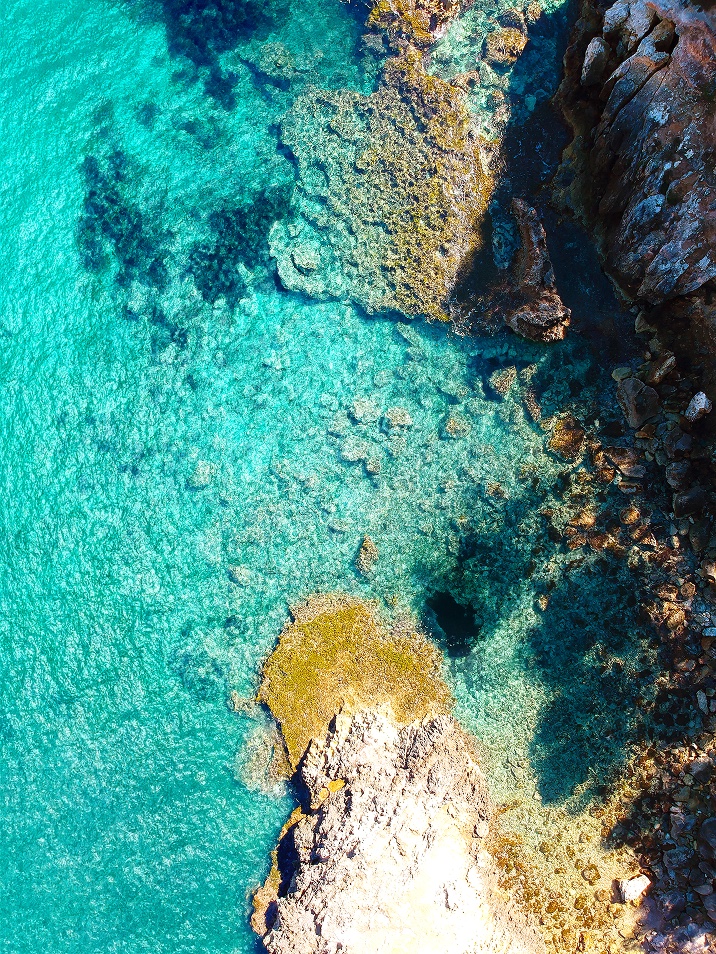
Mondragó Natural Park
Mondragó was declared a natural park in 1992. It covers about 766 hectares, most of it private farmland, with two beaches at the mouth of two seasonal streams: s'Amarador and Font de n'Alis, often simply called Cala Mondragó. Behind each beach is a small wetland that draws water birds, and five signposted paths link the beaches with the farmland and cliffs. The park's information point is beside the Font de n'Alis car park.
Parking is only allowed in the two official car parks, one for each beach. They charge in summer and fill around midday on busy days, so in July and August go early or late. Check current charges before you go.
Es Pontàs
Es Pontàs is a natural limestone arch standing in the sea between Cala Santanyí and Cala Llombards, roughly 20 metres high. The viewpoint is on the clifftop west of Cala Santanyí and is reached by a short walk over uneven ground with little shade and only partial railings, so wear proper shoes. Late afternoon light is the best.
You may also have seen photographs of Caló des Moro, the narrow cove near Cala Llombards. It is reached on foot over rough ground, fills within minutes in high season and is losing its sand, so we suggest saving it for a quiet morning in spring or autumn.
What should you taste and buy in Santanyí?
Buy olive oil. Oli de Santanyí is an organic extra virgin oil from groves near the Mondragó Natural Park, a blend of Arbequina, Picual and Empeltre olives that carries the Mallorca protected designation of origin. It won a Gold Award at the 2026 NYIOOC World Olive Oil Competition. Production is small, so ask in the town's delicatessens and wine shops which stock it, and read our guide to Mallorca's olive oil for the island's other producers.
At the market, look for local cheese and seasonal fruit from the surrounding farms. For more of the island's food producers and tables, our culinary pages are the place to start.
Where should you have dinner in Santanyí?
Book Laudat. It occupies an old Mallorcan house at Carrer de Sant Andreu 18, next to the parish church, with a patio terrace under a lemon tree and several dining rooms inside. The cooking is Mediterranean and market led, with a short à la carte menu and a tasting menu drawn from the same dishes; the Michelin Guide lists it and singles out the veal tongue carpaccio.
Owner Michael Laudat is a sommelier, so the wine list is the reason to linger over an aperitif before dinner. Opening days vary by season and the patio tables go first in summer, so reserve ahead. For more addresses across the island, see our restaurant selection.
Can you add Ses Salines and Es Trenc to the same trip?
You can, but it works better as a second day. Ses Salines, the neighbouring village to the west, holds a small Thursday morning market on its Plaça Major, mainly fruit and vegetables for locals. A few kilometres beyond it lies Es Trenc, the long, undeveloped sandy beach that is the opposite of Santanyí's small rocky coves.
If you are staying in the area for a few nights, put Santanyí on a Wednesday or Saturday and Ses Salines on a Thursday, and keep Es Trenc for an early swim before the beach fills. Our hotel selection covers places to stay across the island.
When is the best time to visit Santanyí?
Late spring and early autumn are the best months: the sea is warm enough to swim, the market is lively and the Mondragó car parks rarely fill. In July and August, go on a market day but arrive early, and swim in the late afternoon. In winter the market still runs and the town is at its most local, though some restaurants close for part of the season, so check before you go.
Santanyí is around an hour by car from Palma. A car is the easiest way to link the town, the park and the viewpoints in one day.
Questions readers ask
What days is Santanyí market?
Santanyí's weekly market is held on Wednesday and Saturday mornings. Stalls spread through the main streets of the old town, the main square and the area around the Sant Andreu church. Arrive before 10:00 for easier parking.
What is the nearest good beach to Santanyí?
The Mondragó Natural Park is the closest place for a proper swim, with two beaches, s'Amarador and Font de n'Alis. Each has an official car park, which charges in summer and fills around midday on busy days. Cala Santanyí is also close and leads to the Es Pontàs viewpoint.
How do you get to the Es Pontàs viewpoint?
Drive to Cala Santanyí and follow the short path along the clifftop to the west. The walk takes roughly 10 to 15 minutes over uneven ground with little shade. Wear proper shoes and keep away from the unrailed edges.
Where should I eat in Santanyí?
Laudat, at Carrer de Sant Andreu 18 next to the parish church, is the classic choice, with a patio under a lemon tree and Mediterranean, market led cooking. It is listed in the Michelin Guide and is popular on market days and summer evenings, so book ahead.
Is Santanyí worth a day trip from Palma?
Yes. Santanyí is around an hour by car from Palma and combines a lively market, a handsome sandstone old town and some of the island's clearest coves within a short drive. Go on a Wednesday or Saturday to see it at its liveliest.
Sources and checks
- Mallorquissimo print guide
- Illes Balears tourism: Santanyí market
- Govern de les Illes Balears: Parc Natural de Mondragó
- Mallorca Magazin: Naturpark Mondragó (2022)
- Mallorca.com: Sant Andreu church, Santanyí
- Mallorca.com: Mirador des Pontàs
- Cal Reiet
- Michelin Guide: Laudat
- Mallorca Magazin: Laudat in Santanyí
- NYIOOC: Oli de Santanyí wins 2026 Gold
- Mallorca.com: Ses Salines weekly market
About the author