CulinaryGuide
Flor de sal from Es Trenc: Mallorca's most precious salt
Eva von Oheimb, who founded Mallorquissimo, has recommended this hand-raked salt from the salt pans by Es Trenc for years. What it is, why it tastes different and which pot to take home.
The short answer
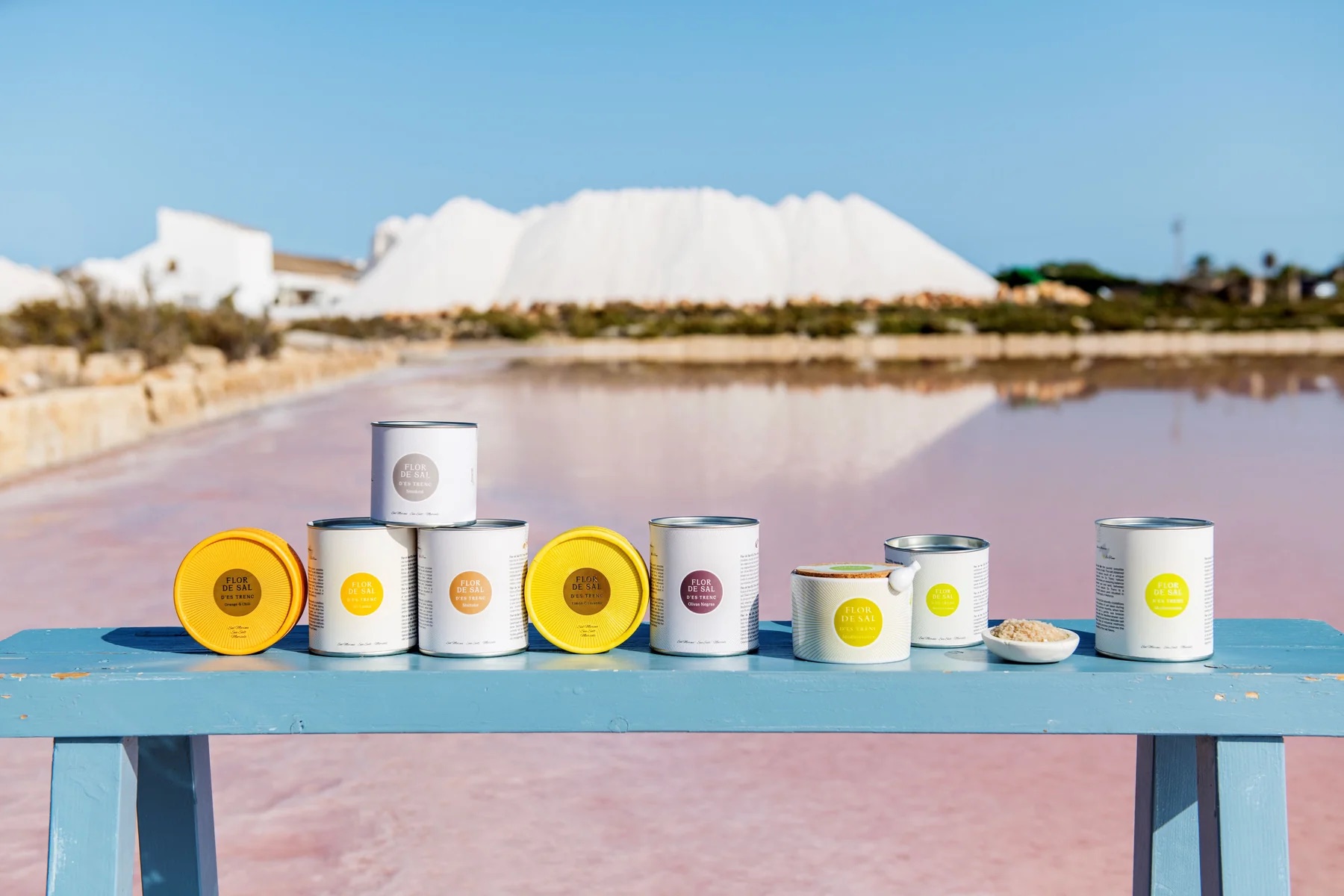
Flor de sal is the thin layer of salt crystals that forms on the surface of the salt pans and is raked off by hand. Mallorca's comes from the salt pans by Es Trenc in the south-east and is sold as Flor de Sal d'Es Trenc: dried in the sun, with nothing added.
Key takeaways
- Flor de sal is the top layer of crystals on the salt pans, gathered by hand rather than by machine.
- Mallorca's comes from the Salinas de Levante by Es Trenc, sold under the Flor de Sal d'Es Trenc name since 2003.
- It is dried in the sun and keeps a little natural moisture, which gives it its crisp texture.
- Use it as a finishing salt: on fish, tomatoes, grilled vegetables, even caramel and crème brûlée.
- Eva von Oheimb, founder of Mallorquissimo, calls it one of the island's most important products.
On this page
If you take one taste of Mallorca home, make it the flor de sal from the salt pans by Es Trenc. It is the fine top layer of the salt, raked by hand, dried in the sun and packed with nothing added, and it turns a plate of tomatoes or a piece of grilled fish into something that tastes of the island.
Eva von Oheimb, who founded Mallorquissimo, wrote about it on mallorquissimo.com as early as 2016, and her verdict was clear.
Flor de Sal d'Es Trenc is the most precious salt in the Mediterranean and without a doubt one of the island's most important products.
Eva von Oheimb, founder of Mallorquissimo
What is flor de sal, and how is it made?
Flor de sal, fleur de sel in French, is the delicate layer of crystals that builds up on the surface of a salt pan. It only forms when the weather is right.
As Eva explains, the summer months are harvest time: it must be hot and slightly windy, and the ideal conditions last only a few days. The top layer is then raked off by hand, as carefully as possible, to keep the delicate crystals intact.
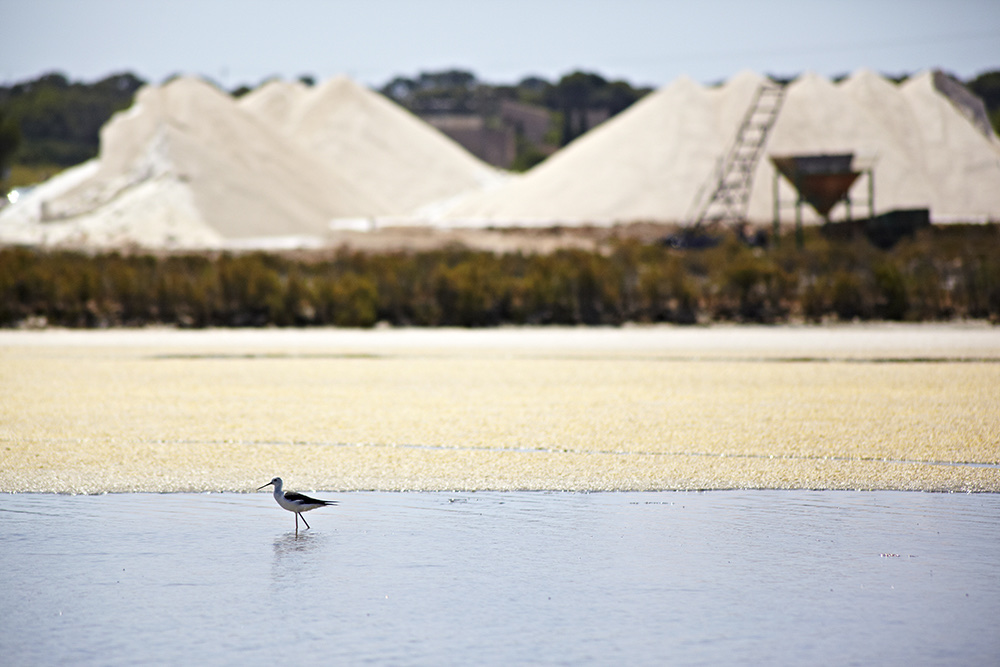
After the harvest the salt dries in the Mallorcan sun. Nothing is added and nothing is taken out, and the producer describes the method as millennia-old and done entirely by hand, from the pan to the pack.
Where on Mallorca is the flor de sal harvested?
It comes from the Salinas de Levante, the salt pans on the road from Campos to Colònia de Sant Jordi in the south-east of the island. They lie inside the Es Trenc nature reserve, a landscape of dunes and wetlands beside one of the island's most beautiful beaches.
The company Salinas de Levante was founded in 1958, and its flor de sal has been harvested and sold under the Flor de Sal d'Es Trenc name since 2003. The salt pans can be visited on guided tours, booked through the producer's own website. Our guide to the south of Mallorca shows what else is close by.
Why does flor de sal taste different from table salt?
Texture is the first difference. The flower-shaped crystals are crisp, and drying in the sun leaves them a little natural moisture.
The second is flavour. The producer points to a high content of minerals and trace elements such as magnesium, and describes the taste as balanced and mild. In Eva's words:
Every single grain has its own aroma.
Eva von Oheimb, founder of Mallorquissimo
Which Flor de Sal d'Es Trenc flavours are worth trying?
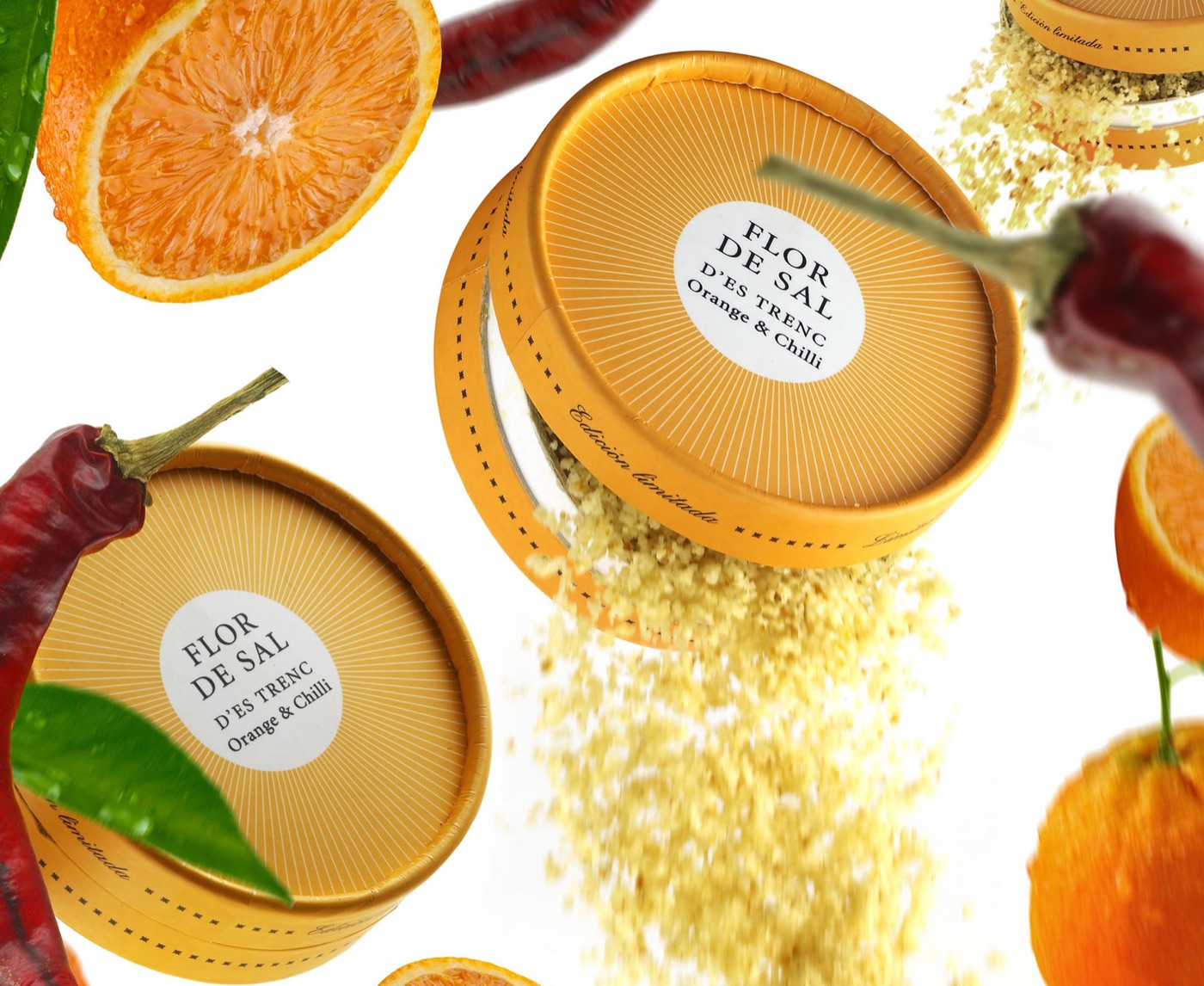
Start with the Natural, the pure, white flor de sal that Eva calls the classic variety. In Mallorca, though, salt is not just salt: after drying, part of the harvest is flavoured with Mediterranean herbs, spices and fruit.
- Natural: the pure flor de sal, which the producer says goes well with any dish.
- Fruit and flowers: Orange & Chili, Lemon & Lavender, Hibiscus.
- From the garden and the grove: Mediterránea, Olivas Negras, Tomato, Beetroot.
- Spicier and smokier: Picante, Smoked, Sri Lanka.
Where can you buy flor de sal in Mallorca?
You will find Flor de Sal d'Es Trenc in delicatessens on the island and in the producer's online shop, which runs in Spanish, English and German. The ceramic pots and gift sets make some of the best edible souvenirs Mallorca has.
Planning a wedding on the island? The small ceramic pots also work as guest favours: see Flor de Sal d'Es Trenc in our wedding directory. For more of the island's producers, browse our culinary pages and our shopping guide, and pair the salt with a bottle from our guide to Mallorca olive oil.
Questions readers ask
What is the difference between flor de sal and sea salt?
Flor de sal is only the fine top layer of crystals that forms on the surface of the salt pans, raked off by hand. Ordinary sea salt is the bulk salt from the pans. Flor de sal is crisper, keeps a little natural moisture and is used as a finishing salt.
Where is flor de sal made in Mallorca?
At the Salinas de Levante, the salt pans on the road from Campos to Colònia de Sant Jordi in the south-east of Mallorca, inside the Es Trenc nature reserve. It is sold as Flor de Sal d'Es Trenc.
Can you visit the salt pans at Es Trenc?
Yes. Flor de Sal d'Es Trenc offers guided visits to the salt pans, booked through its own website. Check dates and availability on its website before you go.
How do you use flor de sal?
As a finishing salt. Sprinkle it over a dish just before serving so the crystals stay crisp: on fish, tomatoes and grilled vegetables, and even on caramel or crème brûlée.
Sources and checks
About the author